
 Sign in with Facebook
Emma Deplores Goodreads Censorship's Reviews > The Dark Child
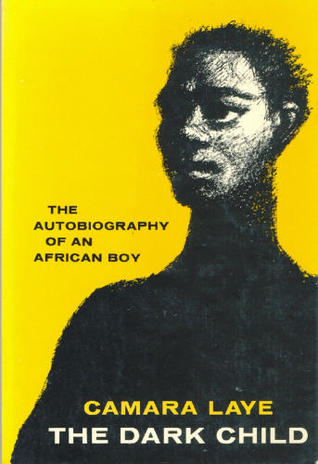
The Dark Child
by

by
Emma Deplores Goodreads Censorship's review
bookshelves: world-books-challenge, africa, memoirs, guinea, read-in-translation, 3-stars-and-a-half
Feb 12, 2014
bookshelves: world-books-challenge, africa, memoirs, guinea, read-in-translation, 3-stars-and-a-half
Not much happens in this gentle, sentimental little book, but it’s a pleasant read all the same. There seems to be some disagreement about whether The Dark Child is a memoir or an autobiographical novel; my library shelves it as nonfiction, though given the abundant dialogue, the author clearly took some creative license.
Either way, it’s a nicely-written coming-of-age story of a boy from in a traditional village in Guinea in the 1930s and 40s. There are no atrocities, no violence (except from bullies at school), no political themes: you would not know from Laye’s writing that Guinea was under French rule at the time, gaining its independence only after this book’s publication in the 1950s. Other characters drift in and out of the story, but more than anything it’s the story of the author’s relationship with his own culture. In the first chapter, his mother introduces him to a snake that visits his father in his workshop – “the guiding spirit of our race,” the parents explain. No one sees any conflict between their superstitions, and his mother’s mysterious powers, and their Muslim beliefs. Later chapters are spent on harvest and coming-of-age rituals. Only toward the end does Laye leave the village to study. It’s a nostalgic story, developing at a graceful, measured pace, with perhaps a bit of stereotyping for the benefit of foreign readers, though at the time apparently any portrayal of life in Africa as calm and cheerful was groundbreaking. For that matter, it’s hardly common now.
At any rate, I’m not falling over myself to recommend this, but I enjoyed it and consider it worth reading. A solid 3.5 stars.
Either way, it’s a nicely-written coming-of-age story of a boy from in a traditional village in Guinea in the 1930s and 40s. There are no atrocities, no violence (except from bullies at school), no political themes: you would not know from Laye’s writing that Guinea was under French rule at the time, gaining its independence only after this book’s publication in the 1950s. Other characters drift in and out of the story, but more than anything it’s the story of the author’s relationship with his own culture. In the first chapter, his mother introduces him to a snake that visits his father in his workshop – “the guiding spirit of our race,” the parents explain. No one sees any conflict between their superstitions, and his mother’s mysterious powers, and their Muslim beliefs. Later chapters are spent on harvest and coming-of-age rituals. Only toward the end does Laye leave the village to study. It’s a nostalgic story, developing at a graceful, measured pace, with perhaps a bit of stereotyping for the benefit of foreign readers, though at the time apparently any portrayal of life in Africa as calm and cheerful was groundbreaking. For that matter, it’s hardly common now.
At any rate, I’m not falling over myself to recommend this, but I enjoyed it and consider it worth reading. A solid 3.5 stars.
Sign into Goodreads to see if any of your friends have read
The Dark Child.
Sign In »
Reading Progress
February 12, 2014
– Shelved as:
might-read
February 12, 2014
– Shelved
April 1, 2014
– Shelved as:
considering
April 1, 2014
– Shelved as:
considering
December 29, 2014
– Shelved as:
to-read
January 10, 2015
–
Started Reading
January 14, 2015
– Shelved as:
world-books-challenge
January 14, 2015
– Shelved as:
africa
January 14, 2015
– Shelved as:
memoirs
January 14, 2015
– Shelved as:
guinea
January 14, 2015
–
Finished Reading
January 16, 2015
– Shelved as:
read-in-translation
January 19, 2015
– Shelved as:
3-stars-and-a-half
